In our first session of Drawing for Games we were re-introduced to some of the techniques we learned over the course of last year, although i can imagine some found this to be useless, i did not. Especially after a summer spent not achieving anything that i had told myself i would in june!
Pre-Instruction Drawings
Before we had any teaching, we were given three 20 minute drawing tasks to guage our individual drawing skills.
First off we were given a choice of two pictures, one of Martin Clunes and the other of Salvador Dali. I chose this picture of Salvador Dali:
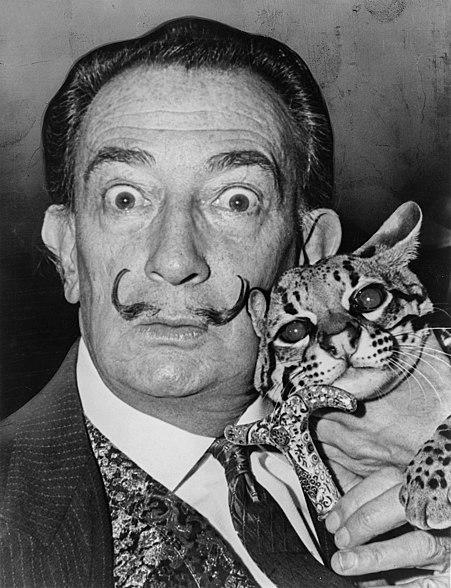
Below is a scan of what i managed to achieve in the given time:

It didn't take me long to realise that i wouldn't be getting very much of the drawing done in the allotted time period given my apparent slow drawing speed, so i aimed to get the basic lines of the drawing out, but as you can see i didn't even manage to do that, so i take from this that i need to learn to improve my drawing speed, especially if i were to go into a position as a concept artist.
Our next task was to draw a picture of our hands in a complicated pose, i took a photo of the pose i drew my hand in:
.jpg)
And here is the drawing i came up with:

Again i am unhappy with how much i achieved in the 20 minutes we had, although i am happy with how well the picture matches the pose.
Finally, our task was to pick a corner of the room and draw it, drawings like these are of course a good test of perspective, a very challenging thing to get right in drawing. I may update this post with a photo of the corner i drew soon, but for now here is the end result:

Mark Making
Our second task was to take the pencil strokes or 'marks' of four different famous artists and try to recreate them. We were given four pictures by Matisse, Van-Gogh, Delacroix and Shahn and asked to make note of their indivual styles, and selecting a small section from each of the images, copy them in our sketchbooks.
Here are the four different sections i chose to copy, hopefully you can match them to the part of the image i was copying! At the bottom you can see a larger box in which we were asked to experiment with our own mark-making techniques:

I found this to be an interesting insight into how works are defined by their artist and how any work i create will most likely exhibit a style of my own.
The Drawing Conflict
This task had us recreating the famous illusion of two faces that also look like a vase. The point as far as i understood was to detach yourself from the object you were drawing in order to make your work flow better.
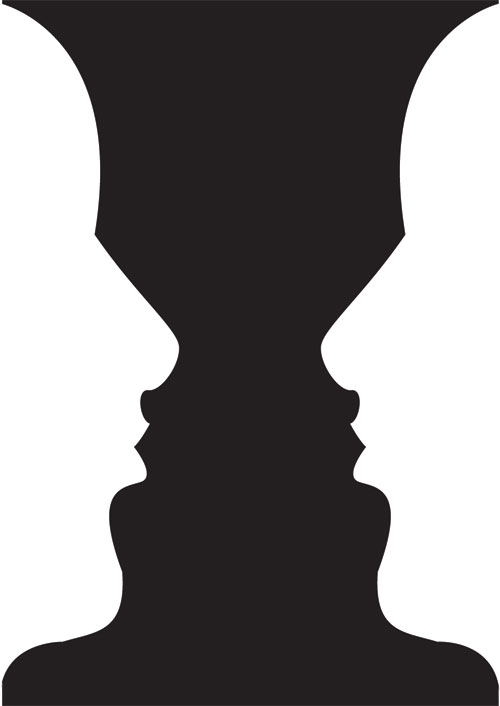
The brain has a tendency to get in the way when one is drawing something the brain can relate to, such as a human face. When drawing these objects the brain has a tendency to detach you from the subject matter and bombard you with mental images of the particular part you are focussing on, meaning instead of drawing how an eye looks on your subject matter, you will draw what your brain thinks the eye should look like. There are a number of ways to combat this, and one way is simply by training you brain not to do it in the first place,another way would be to use...
Upside-Down Drawing
By flipping your subject on its head, you make the brains job of recognising body parts a whole lot harder, to the point where the brain will actually stop doing it and allow you to draw your subject matter, often with better results.
Here you can see the picture i was given (A Portrait of Igor Stravinsky by Picasso), and the result of half an hour spent drawing it upside down:


As you can see i inadvertently managed only to draw a section of the original picture. I'm not sure how this happened but i can only assume this kind of judgement will come with time and practice, although i could just start making smaller drawings!
Contour Drawing
In this exercise we were asked to use the blind contour technique to make a few drawings. Contour drawing is considered a very important skill for any artist, as the initial line work will almost always be the starting point of any drawing, and getting that part wrong effectively dooms the final piece if it goes unnoticed.
Below is a scan of a few of my attempts, note that on the picture of my hand, the largest looking 'finger' is actually my thumb...:

I believe that with time and practice my skill in this particular technique will improve dramatically.